Clean Eating
Why cooking at home changes eating more than any single ingredient swap
The act of preparing food alters portion, pace, composition and cost at once. That bundle explains more than any individual substitution ever does.
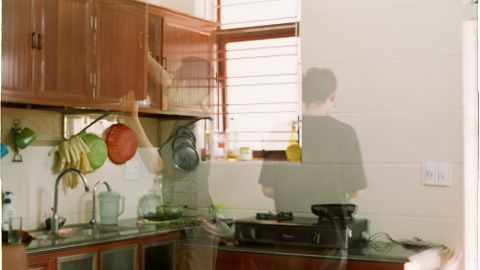
A bundle of changes rather than one
Preparing food at home changes what is in a meal, how much of it appears on the plate, how long it takes to eat and how much it costs to produce. Because these move together, it is difficult to attribute the differences to any single component, and studies attempting to isolate one usually find a modest effect. That difficulty is a feature of the phenomenon rather than a flaw in the research, since the bundle is exactly what makes cooking consequential.
Swapping one ingredient inside an otherwise unchanged pattern changes one variable, which is why such swaps rarely produce the differences people expect from them. The comparison is not between two ingredients but between two different arrangements of an evening, and those arrangements differ in many ways at once.
Why skill matters more than intention
Someone who can produce a reasonable meal without consulting anything treats cooking as a low-effort default, while someone without that fluency treats it as a project. The difference is not motivation but the number of decisions each meal requires, and decisions are expensive at the end of a working day. Fluency comes from repetition of a small number of dishes rather than from breadth, which is the opposite of how cooking is usually taught in popular material.
A handful of meals that can be produced without thought does more for a household's eating than a large collection of recipes that are each attempted once. This also explains why cooking confidence, once established, tends to persist through periods when other health-related routines fall away.
Portion, pace and the shape of a meal
Food served from a pan in a kitchen tends to be portioned differently from food that arrives in a container designed to be eaten directly from it. Meals eaten at a table with other people last longer than meals eaten alone in front of a screen, and duration interacts with the delayed signals of fullness. None of this concerns any target quantity, and framing it that way misses the point, which is that the setting shapes the eating without anyone deciding it should.
The same food can therefore be experienced quite differently depending on where it is eaten and what else is happening at the time. Changing the setting is often easier than changing the food and produces changes that are more durable because they require no ongoing vigilance.
The constraints that make advice fail
Cooking requires time, equipment, storage, a functioning kitchen and enough energy left at the end of the day to use them, and those are not evenly distributed. Advice that assumes all of these produces guilt in the people who lack them, which is worse than useless because it discourages the smaller changes that were available. Shift work, long commutes, shared kitchens and caring responsibilities all reduce the feasible frequency, and that reduction is a fact about circumstances rather than commitment.
The realistic version treats cooking as a spectrum, where partially prepared components and simple assembly still capture much of what matters. Insisting on the fully home-cooked version as the only acceptable standard is a reliable way to produce nothing at all.
What cooking does not settle
Preparing food at home does not by itself make a diet adequate, since it is entirely possible to cook a narrow range of foods for years. Nor does it address any specific nutritional requirement, which for anyone with a diagnosed condition should be discussed with a clinician or a registered dietitian. The claim here is narrower, that the act of cooking changes several variables together in a direction that most dietary patterns benefit from.
That is a modest claim and it is more defensible than the confident ones usually attached to individual foods and ingredients. Its main practical value lies in redirecting attention from what to buy towards how an ordinary evening is actually organised.
- Cooking changes several variables simultaneously
- Skills lower the effort barrier more than motivation does
- Time and facilities are real constraints
Also by Aarav Sharma
- Thirst is a late signal, and other things the body does about waterHydration Tips
- Why a deadline produces a physical response to an arbitrary dateStress Management
- Soreness is not a scoreboard: what delayed muscle ache indicatesPhysical Activity
- Standing, fidgeting and the movement that never gets countedPhysical Activity