Hydration Tips
Where the eight-glasses rule came from, and why it survived without support
The most repeated hydration instruction has no clear origin in evidence. Its persistence says more about how advice spreads than about fluid requirements.

A number without a source
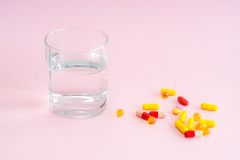
The instruction to drink a fixed number of glasses each day is among the most repeated pieces of health advice and has no clearly identifiable evidential origin. Attempts to trace it have pointed towards an old official recommendation that also noted much of the requirement is met by food, a qualification that did not survive the retelling. Once the qualification was dropped the figure became an instruction about drinks specifically, which is a considerably larger requirement than intended.
This kind of drift is common when a number is memorable and its context is not, and it is very difficult to reverse afterwards. The persistence of the rule is a case study in how a simple figure outcompetes an accurate but complicated statement.
Why simple numbers spread
A single figure is easy to remember, easy to repeat and easy to check oneself against, which are exactly the properties that make advice travel. An accurate statement about hydration would need to mention body size, activity, climate, diet and health status, none of which fit on a poster. Simplification is therefore not a failure of communication so much as a trade, and the cost of the trade is a rule that is wrong for many people.
Commercial interests amplify the effect where a simplified instruction happens to encourage buying something, which applies to bottled drinks directly. The result is a piece of advice that is universally known, rarely questioned and not well founded.
What the requirement actually depends on
Fluid needs vary with body size, with how much is lost through sweat, with the environment and with the water content of the food being eaten. Activity changes the requirement substantially, and so does climate, which is why the same person needs different amounts in different circumstances. Certain conditions and medications alter fluid handling considerably, meaning some people have genuinely specific requirements set by a clinician.
Against that variation, a single universal figure will be too much for some people and too little for others. This is not an argument for ignoring hydration, it is an argument against believing any particular number applies to everyone.
What happened when it was examined
Reviews looking for evidence behind the rule have generally not found support for a specific universal quantity in healthy people. They have also found little support for several associated claims, including the idea that thirst indicates a state that has already become harmful. Some benefits of increased intake have been observed in specific groups, such as people prone to particular kinds of kidney stones, which is a clinical matter.
Generalising from those specific findings to the whole population is exactly the move that produces overconfident advice. The honest summary is that requirements vary and that healthy people with access to drinks generally manage without counting anything.
Why the rule persists anyway
Advice that is harmless for most people and easy to follow tends to survive even after its foundation has been examined and found wanting. Following it produces no obvious problem for most healthy adults, which means there is no feedback signal that would prompt anyone to question it. It also feels virtuous, and behaviours that feel virtuous are defended more strongly than their evidence base would justify.
Anyone who has been given specific fluid advice by a clinician, in either direction, should follow that rather than any general rule. For everyone else the mechanism is more useful than the number, since it explains why no single number could have been correct.
- The rule has no identifiable evidential origin
- Memorable numbers outlive their sources
- Requirements vary too much for a single figure
Also by Priya Patel
- Walking pace, terrain and why the same distance is not the same effortPhysical Activity
- Waking in the small hours: what ordinary sleep architecture looks likeSleep Health
- The gap between a nutrient on a label and a nutrient in a bodyClean Eating
- Reading a health claim: the questions that separate evidence from packagingTop