Sleep Health
What a sleep tracker measures and what it only estimates
Wrist devices infer sleep stages from movement and pulse rather than observing them. Knowing which numbers are inferred changes how much weight they deserve.
How the estimate is produced
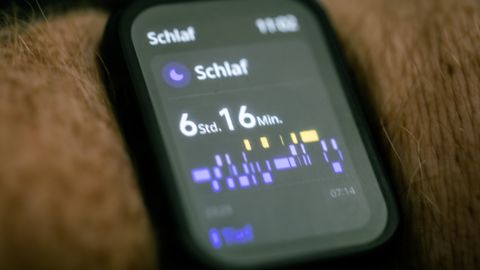
A wrist device records movement and some cardiovascular signal, then applies a model that converts those inputs into an estimate of what the sleeping brain was doing. The measurement in a laboratory works differently, recording electrical activity from the scalp along with eye movement and muscle tone to classify each period directly. Because the wrist device never observes the quantity it reports, its stage figures are predictions rather than observations, however precisely they are displayed.
The prediction is generally better at distinguishing sleep from wakefulness than at separating one stage from another, and this pattern is consistent across devices. Displaying an inferred value to the nearest minute conveys a precision the underlying method does not possess.
Where the estimates go wrong
Lying still while awake resembles sleep from the perspective of a movement sensor, which is why devices tend to overestimate sleep in people who lie awake quietly. That is precisely the population most interested in the measurement, so the error falls hardest on the people relying on it most. Restless sleep produces the opposite problem, with movement during light sleep being read as wakefulness and fragmenting the reported picture.
Manufacturers refine these models continuously, and comparisons between a device and a laboratory recording are the only way to know how well any version performs. Such comparisons exist for some devices and not for others, and the results are not always published where a purchaser can find them.
What the numbers are actually good for
Total time asleep and the consistency of timing are the figures a wrist device estimates most reliably, and they are also the ones that matter most. Trends across weeks carry more information than any single night, since night-to-night variation is large even in people who sleep well. Comparing one night against a personal baseline is more meaningful than comparing it against a population average printed in an application.
The device is best understood as a rough diary that requires no effort to keep, which is a genuine advantage over asking someone to remember. Treating it as a diary rather than an instrument sets expectations at about the right level.
The problem of watching too closely
Sleep is unusual in being disrupted by effort, since trying to sleep increases arousal and makes falling asleep less likely rather than more. A nightly score introduces exactly the kind of evaluative attention that produces this effect, and clinicians have described a pattern of preoccupation with sleep data. People also report feeling worse after seeing a poor score, which suggests the number influences the following day independently of the night it described.
This does not make trackers harmful for everyone, and many people use them without any of this occurring at all. It does mean that someone who is already anxious about sleeping has a specific reason to be cautious about nightly measurement.
What a device cannot tell anyone
No consumer device diagnoses a sleep disorder, and readings suggesting breathing irregularities are prompts for assessment rather than conclusions in themselves. Sleep apnoea, restless legs and long-term insomnia are recognised conditions with established assessments and treatments that require a clinician to arrange. Presenting device output to a doctor is reasonable and can be useful, provided it is offered as a description of a pattern rather than as a diagnosis.
The most effective long-term treatment for chronic insomnia is a structured behavioural therapy, which is not something a device delivers. Anyone whose sleep has changed markedly, or who feels persistently unrefreshed despite adequate time in bed, should raise it rather than continue monitoring alone.
- Stage estimates are inferred, not measured
- Trends are more reliable than single nights
- Anxious monitoring can worsen sleep
Also by Emily Davis
- Daily hassles, not major events, and where the load actually comes fromStress Management
- Why strength work matters for people with no interest in being strongPhysical Activity
- Fibre, fullness and why the same meal lands differently on different daysClean Eating
- Why small changes hold and total overhauls tend to collapseTop