Healthy Aging
The everyday tasks that quietly indicate how ageing is going
Clinicians assess function through ordinary activities rather than through impressive ones. What those tasks reveal is more informative than any single number.
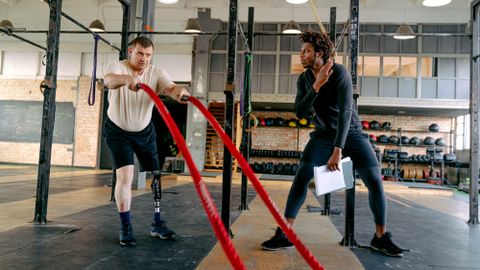
Function rather than performance
Assessments of how someone is ageing tend to focus on ordinary activities such as rising from a chair, walking a short distance and managing stairs. These are chosen because they draw on strength, balance, coordination and cardiovascular capacity together, which is how the body is actually used. A single measure of any one component says considerably less than a familiar task requiring several of them to work together in combination.
The tasks are also familiar, which means changes in them are meaningful to the person concerned rather than only to a clinician. This is a different orientation from the one that dominates popular discussion, which tends towards individual measurements and scores.
Why the change is gradual and easy to miss
Capacity declines slowly enough that behaviour adjusts alongside it, with people taking stairs less often or planning routes with fewer obstacles. Those adjustments happen without any deliberation at all, which means the underlying change is never experienced by the person as a change. By the time a task feels difficult, the reserve that was protecting it has usually been reducing for a considerable period.
This is why noticing what has quietly been avoided is often more informative than assessing what can still be done. The pattern also explains the common experience of a decline appearing to happen suddenly after an illness or a period of inactivity.
The effect of bed rest and inactivity
Extended periods of inactivity produce losses in muscle and in capacity that are considerably faster than the losses of ordinary ageing. This is why hospital stays and periods of illness can produce a step change in function that had been developing very slowly beforehand. Recovery from such losses is possible and takes longer than the loss did, particularly in later life.
Awareness of this has changed practice in many settings towards encouraging movement during recovery where it is safe to do so. What is safe in any individual case is a clinical judgement, and it depends entirely on the condition being recovered from.
Reserve as the underlying idea
Most of these observations point towards reserve, meaning the gap between what a task requires and what a person can currently produce. A large reserve makes ordinary tasks feel easy and absorbs the temporary losses that illness and injury produce. A small reserve makes those same tasks feel effortful and leaves nothing spare to absorb an unexpected setback when one eventually arrives.
Building reserve is the practical argument behind most activity guidance for older adults, and it is more useful than any specific target. The concept also explains why two people with the same measured condition can function very differently in daily life.
What is worth mentioning to a doctor
A noticeable change in the ability to perform an ordinary task is worth reporting, since many causes are treatable and several are easily missed. Unexplained changes in walking, in grip, in balance or in the ability to manage stairs should not be attributed to age without assessment. Unintended changes in body weight, new breathlessness on exertion and new confusion are specific reasons to seek medical attention.
Attributing everything to ageing is a recognised problem in healthcare, and it is worth being explicit that something represents a change. General descriptions of function cannot assess anyone, and the appropriate use of them is to prompt that conversation.
- Function is assessed through ordinary tasks
- Difficulty usually appears gradually
- A change in capacity is worth reporting
Also by David Smith
- What the stress response is for, and why it outlasts the eventStress Management
- Why rumination feels like problem-solving and rarely isMental Wellness
- The quiet cost of a week with no unscheduled hoursMindful Living
- How long a new behaviour takes to feel automatic, and why the answer variesDaily Habits