Healthy Aging
Balance is a trainable skill that declines without being noticed
Stability depends on several systems working together, and it degrades quietly because ordinary life stops testing it. The decline is not inevitable in the way it feels.
Three systems doing one job
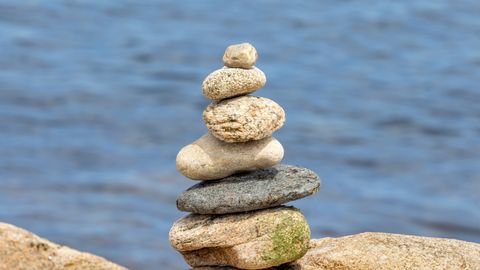
Standing upright depends on information from the eyes, from the balance organs of the inner ear and from position sensors in the joints and muscles. The brain combines these continuously, and the redundancy means the loss of one input can be compensated for by the others up to a point. This is why balance feels harder in the dark, when the visual contribution is removed and more weight falls on the remaining two.
It also explains why standing on an unstable surface is difficult, since the position information from the feet becomes less reliable. Each of these systems changes with age at its own rate, which is part of why balance declines gradually rather than suddenly.
Why the decline goes unnoticed
Balance is rarely tested in ordinary life, since most environments are flat, well lit and free of the demands that would reveal a reduced margin. The reduction therefore accumulates quietly without producing any experience of difficulty at all, until something unexpected happens on an unfamiliar surface. People also adapt their behaviour without noticing, avoiding uneven ground and holding rails, which conceals the change further.
The avoidance reduces the demand on the system, which appears to accelerate the decline in a loop resembling the one affecting strength. Interrupting that loop is the reason balance appears in guidance for older adults alongside strength and aerobic activity.
What responds to practice
Balance improves with practice at any age, and the improvements appear reasonably quickly compared with other physical adaptations. The practice has to be specific, since balance trained in one situation transfers only partly to a different one with different demands. Activities that involve shifting weight, changing direction and dealing with varied surfaces provide this demand as a by-product.
This is one reason walking on uneven outdoor ground differs from walking the same distance on a flat indoor surface. Formal balance exercises exist and are used clinically, and what is appropriate depends on current stability and should be set by a professional.
Vision, footwear and the environment
Deteriorating vision affects balance directly by degrading one of the three inputs, which is one reason eye checks matter more with age than people assume. Certain spectacle designs alter how the ground is perceived at the edge of the visual field, which is a recognised consideration. Footwear affects the position information coming from the feet, and unstable or unfamiliar shoes change stability more than their appearance suggests.
Home environments contribute substantially through lighting, floor surfaces, clutter and the absence of anything to hold in a critical spot. These environmental factors are among the more practical things that can be addressed, and occupational therapists assess them professionally.
When this becomes a clinical matter
Any fall, any near fall, or a new sense of unsteadiness is a reason to speak to a doctor rather than to accept it as part of ageing. Dizziness, spinning sensations and unsteadiness have many possible causes including inner ear conditions, blood pressure changes and medication effects. Several of these are treatable, which is why the assumption that unsteadiness is simply age is a costly one to make.
Medication reviews are a recognised part of assessing falls risk, since some combinations contribute in ways that can be adjusted. Nothing here is a programme, and anyone with concerns about stability should be assessed rather than beginning exercises independently.
- Balance draws on vision, inner ear and position sense
- It declines partly through lack of demand
- It responds to practice at any age
Also by Rohan Desai
- Risk, in the language that health information actually usesPreventative Health
- Loneliness as a physical state and not only a social oneMental Wellness
- Why single-tasking feels slower than it actually isMindful Living
- Friction, cues and why a routine breaks when the kitchen is rearrangedDaily Habits